Advanced Water Technologies Explained
Beyond basic filtration: Demystifying Alkaline ionizers, Hydrogen-rich electrolysis, and Ultraviolet (UV) sterilization systems.
Quick Answer: Advanced Water Technologies Explained
Read our comprehensive guide and independent analysis regarding Advanced Water Technologies. Jbwaterfilter provides strictly unbiased, scientifically verified water purification recommendations.
Read the full technical breakdown below ↓
list_alt Table of Contents
Moving Beyond Pure Water
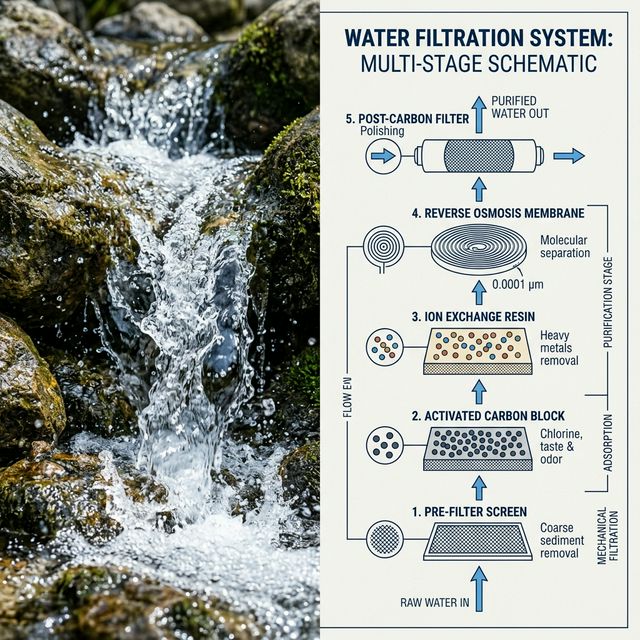
Standard filtration (like Reverse Osmosis or Carbon Block) focuses entirely on subtraction: removing harmful contaminants from the water. However, the high-end water treatment market has shifted towards addition and manipulation: altering the chemical properties of pure water to unlock aggressive health and sterilizing benefits.
1. Alkaline Water Systems
The pH scale measures how acidic or basic a liquid is (0 to 14, with 7 being perfectly neutral). Alkaline water typically boasts a pH of 8.0 to 9.5.
How it Works:
Most basic filters create alkaline water passively by forcing pure water through a ceramic cartridge packed with magnesium and calcium beads. High-end ionizers, however, use titanium-platinum electric plates to physically separate the water molecules, diverting acidic water down the drain and pouring highly alkaline water into your glass.
The Claimed Benefits:
Advocates claim alkaline water neutralizes excess acid in the bloodstream, boosts metabolism, and helps severely mitigate acid reflux (GERD). The added trace minerals are also instantly bioavailable to the body.
2. Hydrogen-Rich Water (H2)
Hydrogen water is simply pure water infused with extra molecular hydrogen gas (H2). It is the bleeding edge of the bio-hacking and elite sports hydration industry.
How it Works:
These highly advanced dispensers use Solid Polymer Electrolyte (SPE) technology to break down H2O, trapping the newly freed hydrogen gas and dissolving it into the drinking water under immense pressure.
The Claimed Benefits:
Molecular hydrogen is the smallest antioxidant in existence. It is capable of crossing the blood-brain barrier to neutralize toxic free radicals at a cellular level, reducing deep bodily inflammation, lactic acid buildup, and fighting oxidative stress linked to aging.
3. Ultraviolet (UV-C) Sterilization
UV light isn't a filter; it's a sterilizer. It physically alters the DNA of living organisms.
How it Works:
Water flows through a stainless steel chamber equipped with a specialized UV-C lamp. As microorganisms float past the intense light, the UV radiation destroys their genetic core, rendering them completely unable to reproduce or cause illness.
When Do You Need It?
If you are relying on well water, borehole water, or collecting rainwater, a UV sterilizer is an absolute, non-negotiable mandatory purchase. Municipal city water is heavily chlorinated to kill these bugs, but private wells have zero chemical protection against E. coli and Giardia.
Frequently Asked Questions
1. Do I need an alkaline filter if my water is RO?
RO water is naturally slightly acidic (pH 6.0 - 6.5) because it lacks minerals. While safe to drink, adding a basic remineralization/alkaline post-filter improves the taste phenomenally and raises the pH to a beneficial 7.5 - 8.5.
2. How long does the hydrogen gas stay in the water?
Hydrogen is the lightest element in the universe. Once dispensed into an open glass, the H2 gas will completely evaporate into the atmosphere within 15 to 30 minutes. You must drink hydrogen water immediately after dispensing it.
Deep Dive: Advanced Water Treatment
Explore specialized systems designed to solve extreme water chemistry problems:
Whole House Softeners
How salt-based ion exchange stops calcium scale.
Whole House Softeners
Destroying bacterial DNA with ultraviolet light.
Whole House Softeners
The pinnacle of industrial-grade residential disinfection.
Whole House Softeners
Stopping corrosive low-pH well water from eating copper pipes.
Whole House Softeners
Why standard carbon fails and catalytic carbon is required.
Related ADVANCED TECHNOLOGIES Guides
Water Filter Installation in Johor Bahru
JB water quality analysis, recommended filtration systems, and fast same-day installation across all Johor Bahru zones.
Water Filter Installation in Johor Bahru
The high-voltage science behind altering the pH scale of your drinking water.
What is an Alkaline Water Ionizer?
Strict independence and scientific accuracy.
Editorial Policy
A step-by-step masterclass on how to clean, flush, and replace components in both outdoor POE systems and indoor RO dispensers.