Water Hardness in Johor Bahru — Scale and Appliance Impact
Understanding calcium and magnesium concentrations in Johor's municipal supply, the chemistry of limescale, and protecting home hardware.
Quick Answer: Water Hardness in Johor Bahru
Johor Bahru's tap water is classified as soft to moderately hard, typically measuring well below the national maximum limit of 500 mg/L. Despite this, local households frequently experience scale build-up on heating elements and taps due to cumulative mineral concentration over time. Managing water hardness johor bahru is key to preventing limescale build-up and preserving the lifespan of water heaters, washing machines, and kettles.
Read the full technical breakdown below ↓
list_alt Table of Contents
What is Water Hardness and How is it Classified?
Water hardness is a chemical property determined by the concentration of dissolved multivalent metallic cations, primarily calcium ($Ca^{2+}$) and magnesium ($Mg^{2+}$). These minerals enter water systems naturally as rain travels through soil and geological formations containing chalk, limestone, or dolomite. As water dissolves these minerals, it carries calcium carbonate ($CaCO_3$) and magnesium carbonate into municipal raw reservoirs.
Standard scientific classifications established by international bodies categorize water hardness based on the equivalent concentration of calcium carbonate. Water containing less than 60 mg/L of calcium carbonate is classified as soft. Water containing between 61 mg/L and 120 mg/L is categorized as moderately hard, while concentrations from 121 mg/L to 180 mg/L are classified as hard. Any water source with hardness exceeding 180 mg/L is considered very hard. The unit mg/L is chemically identical to parts per million (ppm) in these analyses.
Although calcium and magnesium are essential dietary minerals that present no direct risk to human health, their behavior changes when subjected to heat. When hard water is heated or evaporated, the dissolved minerals undergo a chemical reaction, precipitating out of solution as a solid residue known as calcium carbonate scale, or limescale. This chalky white crust acts as a thermal insulator and can restrict water flow in domestic systems.
Tap Water Hardness in Johor Bahru: The Local Profile
The profile of municipal tap water in Johor Bahru differs significantly from the geological conditions found in regions with heavy limestone aquifers. Under the regulatory oversight of SPAN and according to public data from Ranhill SAJ, Johor Bahru's tap water is sourced predominantly from surface river basins and local reservoirs rather than deep groundwater reserves.
Because surface waters have limited contact with underground limestone deposits, the baseline water hardness johor bahru typically ranges from soft to moderately hard. Johor Bahru's water is generally regarded as soft to moderately hard, well below the national maximum limit, though exact hardness varies by source and area. A home test is the only reliable way to know your specific level. Under the Ministry of Health's National Drinking Water Quality Standards, the maximum permissible limit for total hardness in drinking water is set at 500 mg/L, meaning Johor Bahru's water sits comfortably within official safety guidelines.
However, even moderately soft water can cause scaling issues over time. While the hardness concentration per liter of water is relatively low, municipal water is continuously heated and evaporated in household appliances. This continuous evaporation results in a cumulative concentration effect, causing minerals to build up slowly over months and years, eventually forming visible white scale on heating coils and faucet aerators.
Impact of Scale Build-Up on Household Appliances
The domestic consequences of water hardness become apparent inside heat-transfer appliances. Limescale build-up acts as an efficient thermal insulator, significantly reducing heat transfer efficiency. When scale deposits form on electric water heater coils, the heating element must work harder and run hotter to heat the surrounding water, leading to increased electricity consumption and premature element burnout.
In instantaneous storage water heaters, scale can restrict the internal flow control valves, causing pressure variations and temperature fluctuations. In steam irons, electric kettles, and coffee makers, micro-particles of scale can break loose, clogging internal nozzles and valves. Over time, these mineral deposits can also damage the shaft seals of washing machine drums and dishwashers, causing leaks and motor failure.
Furthermore, pipe scaling is a progressive issue. As layers of calcium carbonate accumulate inside household piping, the internal diameter of the pipes decreases, which increases friction and reduces water pressure at fixtures. For homeowners in Johor Bahru, this mineral accumulation is particularly noticeable in high-temperature appliances where the precipitation rate of calcium carbonate is accelerated.
Signs of Hard Water in Your Daily Routine
Johor Bahru residents can identify water hardness issues through several common daily observations. The most immediate sign is the formation of white, chalky residue on chrome taps, shower doors, and around sink drains. This residue is difficult to wipe away with standard cleaning agents and requires acidic cleaners to dissolve.
Another symptom is the performance of household soaps and detergents. Hardness minerals react chemically with soap, reducing its ability to lather. This reaction forms an insoluble precipitate known as soap scum, which leaves a dull film on bathtubs and bathroom tiles. Homeowners may find they need to use more shampoo or laundry detergent to achieve the same cleaning effect compared to areas with very soft water.
Additionally, laundering clothes in hard water can cause fabrics to feel stiff, scratchy, and look grey or dull over time due to mineral particulates trapping dirt within the fabric fibers. For personal grooming, bathing in harder water can strip natural oils from the skin and hair, leaving some individuals with dry skin or brittle hair after washing.
Effective Solutions for Hard Water in Malaysian Homes
Addressing water hardness issues requires selecting a technology that matches your household's specific needs and water usage patterns. The most common methods include physical filtration, chemical conditioning, and ion exchange.
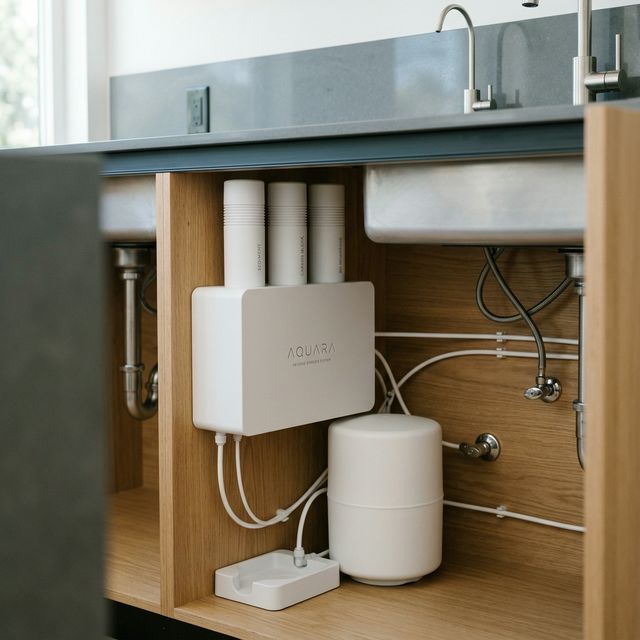
To physically remove hardness minerals, a Reverse Osmosis (RO) system is the most effective choice. Because RO membranes have microscopic pore structures, they filter out over 90 percent of dissolved calcium and magnesium ions. RO systems are ideal for producing soft drinking water, but their low flow rate and water waste make them unsuitable for whole-house use. For point-of-entry systems protecting all household piping, ion-exchange water softeners are the industry standard. These systems pass water through a bed of sodium-charged resin beads, swapping calcium and magnesium ions for sodium ions, completely preventing limescale formation.
Alternatively, physical conditioners or descalers use magnetic or catalytic media to alter the crystal structure of calcium carbonate. While these systems do not remove the minerals, they prevent them from adhering to metal surfaces, reducing scale build-up inside water heaters without soft-water benefits. Choosing between these technologies depends on whether you seek to protect specific appliances or desire soft water throughout your entire home.
Johor Bahru Local Authority Guides
Looking for customized solutions based on JB's water infrastructure? Explore our specialized local guides:
Related Water Quality Guides
Is JB tap water safe to drink in 2026 — Ranhill SAJ overview
An in-depth analysis of Johor Bahru's tap water safety and Ranhill SAJ's water treatment standards.
What TDS Means and How to Interpret Readings
De-mystifying total dissolved solids measurements and what they mean for your drinking water quality.
What is a TDS meter and how to use one at home
A practical step-by-step guide to measuring your water's total dissolved solids using a digital meter.
Do More Stages Mean Better Water? The 3 vs 8 Stage Myth
De-bunking the multi-stage filter sales pitch and looking at what stages actually do in water filtration.
This article is general educational information and does not constitute professional testing or medical advice. For actual water quality, refer to official testing (Ranhill SAJ / KKM).