What TDS Means and How to Interpret Your Own Reading
Understanding dissolved inorganic and organic substances in your drinking water, official health limits, and what a TDS meter actually measures.
Quick Answer: What is TDS Water?
TDS stands for Total Dissolved Solids, representing the cumulative concentration of minerals, salts, metals, and organic compounds dissolved in water. Knowing what is tds water helps evaluate general mineral density, but a high or low reading does not directly indicate safety. Official municipal standards consider TDS levels up to 1000 mg/L acceptable, though levels below 500 mg/L are preferred for optimal taste and palatability.
Read the full technical breakdown below ↓
list_alt Table of Contents
What is TDS (Total Dissolved Solids) in Water?
Total Dissolved Solids (TDS) refers to the total weight of all inorganic and organic substances dissolved in a given volume of water. These dissolved solids exist as microscopic particles that pass through conventional mechanical filtration. The main constituents of TDS are typically inorganic salts, principally calcium, magnesium, potassium, sodium, bicarbonates, chlorides, and sulfates, along with small amounts of organic matter that are dissolved in water.
TDS is commonly measured in milligrams per liter (mg/L), which is equivalent to parts per million (ppm). It is important to distinguish dissolved solids from suspended solids. Suspended solids are physical particles like mud, clay, rust, and organic fibers that remain suspended in the water column and can be filtered out by sediment filters. Dissolved solids, on the other hand, are fully integrated into the molecular structure of the water, requiring advanced chemical or membrane processes to remove.
Understanding what is tds water is key to evaluating the general characteristics of your tap water. TDS originates from natural mineral springs, urban runoff, agricultural wastewater, industrial discharges, and the chemicals used during municipal water treatment. Because water is an excellent solvent, it dissolves minerals from the surrounding soil and rocks as it flows through catchments, giving municipal water a baseline TDS level before it even enters transmission pipes.
Official Guidelines for TDS Levels (MOH & WHO Standards)
Public health authorities establish guidelines for TDS to ensure drinking water is both safe and pleasant to consume. While TDS itself is not considered a direct health hazard, high levels can significantly alter the taste, color, and odor of water, and can cause scale build-up in water infrastructure and appliances.
The World Health Organization (WHO) has established taste panels to evaluate how consumers perceive TDS in drinking water. According to WHO findings, water with a TDS level below 300 mg/L is generally rated as excellent, while levels between 300 mg/L and 600 mg/L are considered good. Water with a TDS concentration between 600 mg/L and 900 mg/L is rated as fair. However, once TDS levels exceed 1000 mg/L, the water becomes increasingly unpalatable, displaying a distinct salty, metallic, or bitter taste.
In Malaysia, the Ministry of Health (MOH/KKM) sets the National Drinking Water Quality Standards, aligning with international regulations. Under these guidelines, the maximum permissible limit for TDS in municipal drinking water is established at 1000 mg/L. Although municipal water is deemed acceptable for consumption up to this limit, public health bodies recommend keeping household levels below 500 mg/L to ensure optimum palatability and to prevent scale accumulation in household heating elements.
What a High or Low TDS Reading Actually Means
One of the most common misconceptions in water filtration is that a TDS meter measures water safety or purity. In reality, a TDS reading is simply a quantitative measurement of dissolved ions; it is entirely blind to the qualitative nature of those ions. A low TDS reading does not guarantee water is safe, nor does a high TDS reading prove it is dangerous.
For instance, a glass of water containing beneficial minerals like calcium, magnesium, and potassium can show a moderately high TDS reading. This water is completely safe and healthy to drink. Conversely, water contaminated with trace levels of toxic chemicals, volatile organic compounds (VOCs), pesticides, or pathogenic bacteria could yield a very low TDS reading, despite being highly dangerous to ingest. Therefore, a TDS meter should never be used as a standalone indicator of biological or chemical safety.
A high TDS reading indicates that the water contains a high concentration of dissolved minerals or salts. While this is rarely a health concern, it can lead to aesthetic issues such as white mineral spots on dishes, dry skin after showering, and mineral scale build-up inside coffee makers, boilers, and pipes. A low TDS reading indicates soft water with minimal mineral content. While soft water prevents scale, extremely low TDS water can taste flat or bland and can be mildly corrosive to plumbing fixtures over time.
How to Test TDS at Home and Interpret the Numbers
Testing TDS at home is simple and inexpensive using a handheld digital TDS meter. These devices work by measuring the electrical conductivity (EC) of the water. Since dissolved inorganic salts and minerals conduct electricity, the meter measures the electrical current flowing through the water sample and converts it into a TDS reading in ppm or mg/L.
To perform the test, you submerge the meter's metal probes into a clean glass of water. The digital screen will display a numerical value. To interpret this reading, refer to established guidelines. Municipal tap water in urban Malaysian areas generally falls within the range WHO rates as good-quality drinking water, though the exact reading varies by location, pipe age, and storage. The only way to know your own figure is to test it directly. If your tap water reading is higher, it suggests a higher baseline concentration of dissolved minerals.
It is critical to note that home TDS meters cannot differentiate between harmless minerals and toxic substances. If you suspect your water contains dangerous chemical contaminants, lead, or bacteria, you must submit water samples to a certified laboratory for comprehensive chemical and microbiological analysis. A simple handheld meter is only a tool for checking mineral density, not a diagnostic device for waterborne diseases.
Water Filters and TDS: Which Systems Remove Dissolved Solids?
Many homeowners buy water filters expecting them to reduce TDS readings, only to find the numbers remain unchanged after installation. This occurs because different filtration technologies target different types of contaminants. Standard physical filters do not affect dissolved solids.
Sediment filters, activated carbon blocks, and ultrafiltration (UF) membranes are designed to trap physical particulates, chlorine, organic chemicals, and bacteria. Because these systems do not remove dissolved mineral ions, the TDS reading of the filtered water will remain identical to that of the raw tap water. This is normal and does not mean the filter is failing; it simply means the filter is leaving the water's natural mineral content intact while removing harmful physical and chemical impurities.
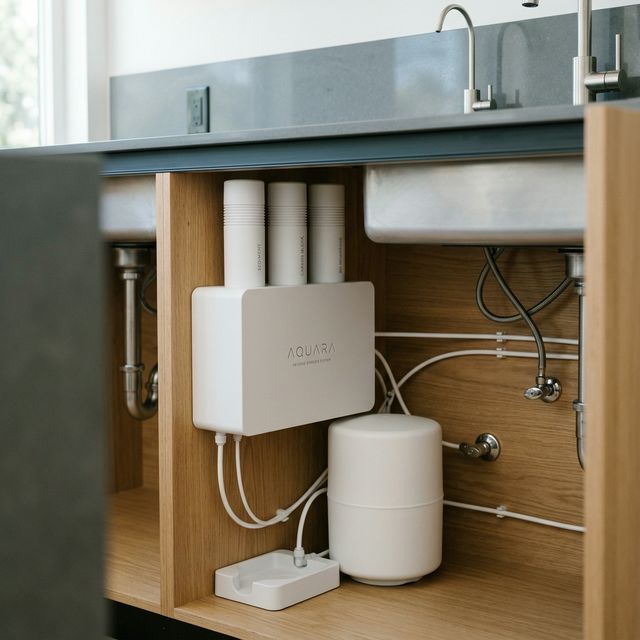
To physically reduce TDS, you must use a system capable of separating dissolved ions from water molecules. The most common household technology for this is Reverse Osmosis (RO). An RO system forces water under pressure through a semi-permeable membrane with microscopic pores, blocking dissolved mineral ions and heavy metals while allowing only pure water molecules to pass. An RO system typically reduces TDS by over 90 percent. Another technology that removes TDS is distillation, which evaporates water into steam and condenses it back into liquid, leaving all dissolved solids behind in the boiling chamber.
Johor Bahru Local Authority Guides
Looking for customized solutions based on JB's water infrastructure? Explore our specialized local guides:
Related Water Quality Guides
Is JB tap water safe to drink in 2026 — Ranhill SAJ overview
An in-depth analysis of Johor Bahru's tap water safety and Ranhill SAJ's water treatment standards.
Water Hardness in Johor Bahru & Appliance Impact
Understanding scale deposits, calcium carbonate levels, and how hard water affects household machinery.
What is a TDS meter and how to use one at home
A practical step-by-step guide to measuring your water's total dissolved solids using a digital meter.
Do More Stages Mean Better Water? The 3 vs 8 Stage Myth
De-bunking the multi-stage filter sales pitch and looking at what stages actually do in water filtration.
This article is general educational information and does not constitute professional testing or medical advice. For actual water quality, refer to official testing (Ranhill SAJ / KKM).