Understanding Micron Ratings
De-mystifying the measurement scale that determines exactly what your filter is capable of blocking.
Quick Answer: Understanding Micron Ratings
Read our comprehensive guide and independent analysis regarding Understanding Micron Ratings. Jbwaterfilter provides strictly unbiased, scientifically verified water purification recommendations.
Read the full technical breakdown below ↓
list_alt Table of Contents
What Exactly is a Micron?
A micron (short for micrometer) is a unit of measurement equal to one-millionth of a meter. To put that into perspective:
- A single grain of beach sand is about 100 to 1,000 microns.
- A human hair is roughly 70 microns thick.
- A red blood cell is about 8 microns across.
- Most bacteria are between 0.5 and 2 microns in diameter.
When a water filter is advertised as a "1 Micron Filter," it means the microscopic pores acting as a net are 1 micrometer wide. Anything larger than 1 micron will be trapped, while anything smaller will pass through.
Nominal vs Absolute Ratings
This is the biggest trick in water filter marketing. You must know the difference before buying:
Nominal Rating
A "Nominal 1 Micron" rating means the filter will catch roughly 85% of particles that are 1 micron or larger. Because the pores are irregularly shaped, a fair amount of 1-micron particles will still slip through.
Absolute Rating
An "Absolute 1 Micron" rating is a strict scientific standard. It means the filter has been laboratory certified to trap 99.9% of all particles 1 micron or larger. If you are dealing with dangerous pathogens, you must use an Absolute rated filter.
Standard Ratings by Technology
Read Next:
Related WATER BASICS Guides
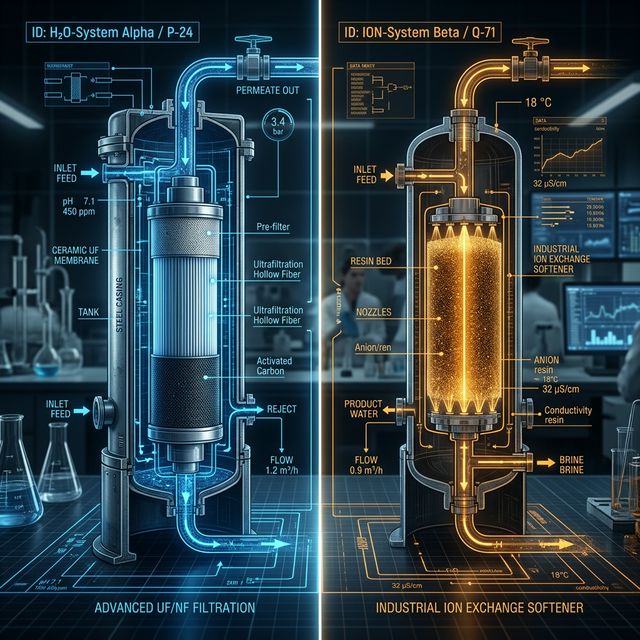
Activated Carbon Explained
The undisputed king of removing bad tastes, odors, and chlorine from your water.
Activated Carbon Explained
The physical and chemical science behind rendering contaminated water safe to drink.
How Do Water Filters Work?
From boiling ancient muddy river water to snapping together microscopic RO modules.
The History of Filtration
The unsung hero of the filtration world that protects your expensive machinery from mud and rust.