
Chloramine vs chlorine in Malaysia's water supply
A chemical and practical breakdown of public water disinfection methods and their impact on household filtration.
Quick Answer: Chloramine vs Chlorine in Malaysia
When comparing chloramine vs chlorine malaysia municipal water supplies, public utilities like Ranhill SAJ primarily rely on free chlorine for main disinfection due to its rapid bactericidal action. However, chloramines form when chlorine binds with natural ammonia or nitrogen compounds, resulting in a more persistent chemical that lingers in extensive distribution networks. Standard carbon block filters readily capture free chlorine, while chloramines require catalytic carbon or extended contact time for complete reduction.
Read the full technical breakdown below ↓
list_alt Table of Contents
- 1. Primary Disinfection: Why Utilities Rely on Free Chlorine
- 2. Understanding Chloramines: Formation and Chemistry
- 3. Chemical Stability, Odor Profiles, and Disinfection By-Products
- 4. Malaysian Standards and Johor Bahru's Distribution Reality
- 5. Household Filtration Strategies for Chlorine and Chloramines
1. Primary Disinfection: Why Utilities Rely on Free Chlorine
Clean drinking water is fundamental to public health infrastructure worldwide. In Malaysia, municipal water treatment operators—including Ranhill SAJ in Johor and Air Selangor in the Klang Valley—rely primarily on chlorine gas or sodium hypochlorite as their primary disinfection agent. This conventional chlorination process has served as the backbone of modern municipal sanitation for more than a century.
Free chlorine is an exceptionally potent oxidizer. When introduced to raw water drawn from river basins such as Sungai Johor or Sungai Muar, it rapidly penetrates microbial cell walls, destroying pathogenic bacteria, viruses, and amoebae within minutes of contact. This swift disinfection capability is essential during the final stages of treatment at the Loji Rawatan Air (LRA), ensuring that water leaving the plant is bacteriologically sterile.
Another critical characteristic of chlorine is its ability to maintain a measurable residual presence. Under national water supply guidelines, municipal water cannot simply be disinfected at the plant gate; it must carry an active residual concentration through hundreds of kilometers of buried transmission mains until it flows out of the consumer's tap. This protective barrier prevents microbial re-growth within long supply runs.
2. Understanding Chloramines: Formation and Chemistry
While free chlorine remains the predominant disinfectant in Malaysia, consumers increasingly encounter discussions surrounding chloramines. Chloramines are chemical compounds formed when free chlorine combines with ammonia (NH3) in water. This chemical family includes monochloramine, dichloramine, and trichloramine.
In municipal engineering, some international utilities deliberately introduce small amounts of ammonia alongside chlorine to produce monochloramine as a secondary disinfectant. In Malaysia, however, utility protocols under the National Water Services Commission (SPAN) framework generally specify free chlorine as the target operational standard. Despite this, chloramines frequently emerge involuntarily within local distribution lines.
Raw river sources in tropical climates naturally carry organic nitrogen and agricultural runoff. When water treatment plants dose raw water with chlorine, natural chemical reactions occur between residual chlorine and trace ammonia or organic amines. The resulting combined chlorine species—predominantly monochloramine—exhibit significantly different physical and chemical behaviors compared to free elemental chlorine.
3. Chemical Stability, Odor Profiles, and Disinfection By-Products
To understand the practical implications for Malaysian households, it is helpful to compare how chlorine and chloramine interact with heat, air, and organic materials:
- Volatility and Dissipation: Free chlorine is highly volatile. If you fill an open pitcher with chlorinated municipal tap water and let it sit at room temperature for several hours, or bring it to a rolling boil, much of the dissolved chlorine gas naturally evaporates into the air. Chloramines, by contrast, are chemically bonded and far more stable; boiling or standing water dissipates chloramines at a drastically slower rate.
- Taste and Odor Characteristics: Contrary to common assumption, the intense "swimming pool" bleach smell that homeowners occasionally notice from their taps is rarely pure free chlorine. That sharp, irritating odor is usually caused by combined chloramines or trichloramines formed when chlorine reacts with organic compounds in stagnant pipes or communal storage tanks. Pure free chlorine in properly balanced water exhibits a much milder scent.
- Disinfection By-Products (DBPs): When free chlorine encounters natural organic matter (such as decaying plant tannins in tropical river water), it can generate trace chemical by-products known as trihalomethanes (THMs) and haloacetic acids (HAAs). Water operators carefully regulate chemical dosages to keep DBPs within safe national thresholds. Chloramines produce substantially lower concentrations of regulated THMs, which is why some international cities utilize them, though they can produce alternative secondary compounds.
4. Malaysian Standards and Johor Bahru's Distribution Reality
In Malaysia, drinking water quality is governed by the National Drinking Water Quality Standards (NDQWS), issued and monitored by the Ministry of Health (KKM/MOH) and enforced by SPAN. The official guidelines mandate that municipal operators maintain a minimum free residual chlorine level of 0.2 mg/L at consumer distribution points, with an upper allowable limit of 5.0 mg/L.
In Johor Bahru, Ranhill SAJ manages water distribution across diverse topographies, from established urban centers in Johor Bahru city to sprawling residential townships in Iskandar Puteri, Mount Austin, and Pasir Gudang. Because ambient temperatures in southern Malaysia remain consistently elevated throughout the year, chemical dissipation accelerates inside long, underground pipeline networks.
To guarantee that the mandatory 0.2 mg/L sanitary residual reaches homes located at the extreme ends of the distribution network, treatment facilities must calibrate chlorine levels conservatively at the plant exit. Consequently, households located near major distribution mains often detect noticeable chlorine odors, while residents in high-rise apartments with large rooftop holding tanks may experience varying ratios of free chlorine to combined chloramines as water ages in storage.
5. Household Filtration Strategies for Chlorine and Chloramines
Because residual sanitizers are intended to protect water during transit rather than enhance beverage flavor, many Malaysian homeowners choose to filter their water at home. Understanding the distinct properties of chloramine vs chlorine is critical when selecting filtration hardware:
Standard Activated Carbon Blocks: Standard granular activated carbon (GAC) and extruded carbon blocks rely on physical adsorption. They are exceptionally effective at removing free chlorine, bad tastes, and chemical odors. As chlorinated water passes through the porous carbon matrix, chlorine undergoes a chemical catalytic reaction that converts it into harmless dissolved chloride ions.
Catalytic Carbon for Chloramine Reduction: Because chloramines are chemically stable, standard activated carbon requires prolonged contact time (slower flow rates) to break down the chloramine bond. For advanced whole-house Point-of-Entry (POE) setups, catalytic carbon—a specially modified activated carbon with enhanced surface catalytic properties—is recommended. Catalytic carbon accelerates the chemical breakdown of chloramines into harmless chloride and nitrogen gas.
Point-of-Use Reverse Osmosis (RO): In kitchen drinking systems, multi-stage reverse osmosis units provide comprehensive protection. These systems pair high-density carbon pre-filters with semi-permeable membranes. The carbon pre-stages capture free chlorine before it can reach and degrade the sensitive polyamide RO membrane, while the microscopic membrane barrier rejects remaining dissolved minerals and compounds, delivering clean drinking and cooking water.
Read Next:
Johor Bahru Local Authority Guides
Looking for customized solutions based on JB's water infrastructure? Explore our specialized local guides:
Related Water Quality Guides

Is JB Tap Water Safe to Drink in 2026: Ranhill SAJ Overview
Understanding municipal treatment standards, transmission pipelines, and domestic water quality in Johor.
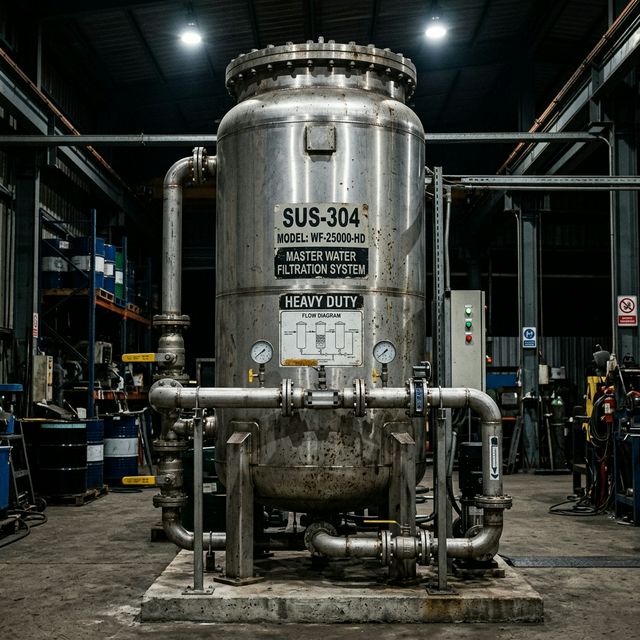
What TDS Means and How to Interpret Readings
De-mystifying total dissolved solids measurements and what they mean for your drinking water quality.
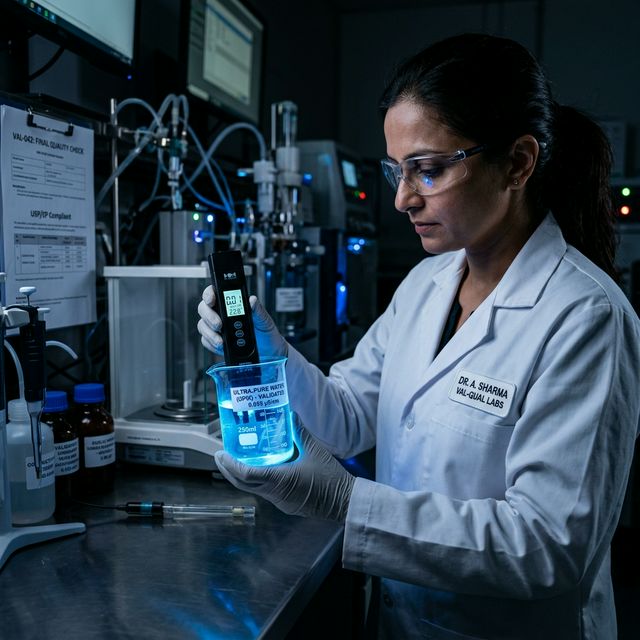
Water Hardness in Johor Bahru & Appliance Impact
Understanding scale deposits, calcium carbonate levels, and how hard water affects household machinery.
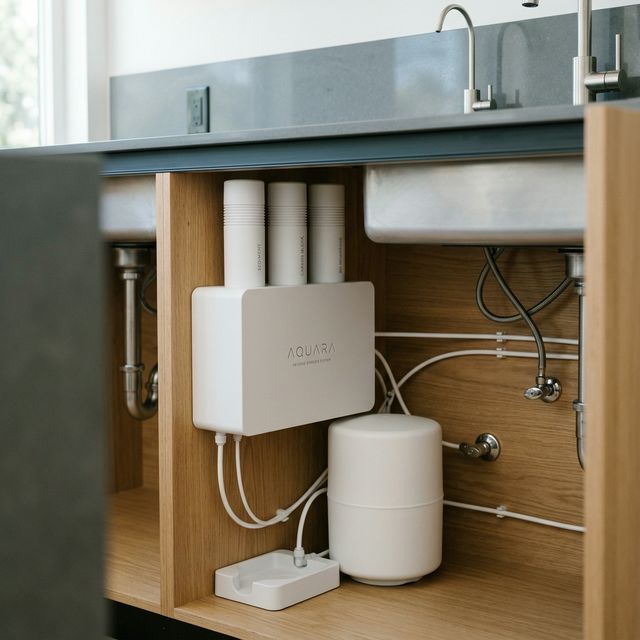
Activated Carbon Filters Explained: GAC vs Carbon Block
How activated carbon media adsorbs chlorine, volatile organic compounds, and unwanted chemical tastes.
This article is general educational information and does not constitute professional testing or medical advice. For actual water quality, refer to official testing (Ranhill SAJ / KKM).