What Is a Water Filter? A Comprehensive Guide to Clean Water
Everything you need to know about water filtration, how it works, and why it's the foundation of a healthy home.
Water is the fundamental source of biological life, yet what flows from your tap is rarely just pure H₂O. A water filter is an indispensable piece of home infrastructure designed to strip away impurities, hazardous chemicals, and microscopic contaminants from your water supply. In Malaysia, where aging municipal transit pipes often introduce secondary contamination like rust and sediment before the water reaches your property, relying solely on municipal treatment is a risk many homeowners are no longer willing to take. Whether you are boiling water for your children's morning formula or washing organic vegetables in the kitchen sink, understanding the mechanics of water filtration is the first step toward securing absolute hydration safety for your family.
Quick Answer: What is a water filter?
A water filter is a physical or chemical barrier that removes impurities, sediment, heavy metals, and chemicals (like chlorine) from a water source. It operates by trapping larger particles in microscopic pores or utilizing adsorption to pull chemical contaminants out of the water, rendering it incredibly safe, pure, and clean for human consumption.
Read the full technical breakdown below ↓
list_alt Table of Contents
What It Is
Fundamentally, a water filter is an engineered purification gateway. Unlike a water softener, which specifically uses ion-exchange to target calcium and magnesium to prevent hard water scaling, a water filter is designed to handle a vast spectrum of physical and chemical contaminants.
From simple pitcher filters utilizing basic carbon granules to sophisticated multi-stage Reverse Osmosis (RO) systems installed under your sink, the architecture varies vastly. At its core, it is the process of forcing water through a highly controlled medium. As the water passes through this medium, unwanted elements are permanently intercepted. This can range from macroscopic debris like sand, silt, and rust flaking off underground municipal pipes, down to microscopic molecular threats such as lead, arsenic, volatile organic compounds (VOCs), and even microscopic pathogens. In the context of a modern home, a filtration system acts as a personalized, final-stage water treatment plant, giving you ultimate control over the exact chemical makeup of the liquid you and your family ingest daily.
How It Works
Filtration operates on two primary scientific principles: mechanical filtration and chemical filtration. Most high-quality residential systems utilize a sequential combination of both methods to achieve maximum purity.
filter_alt Mechanical Filtration
Picture a microscopic net or sieve. Mechanical filters, such as sediment filters or hollow-fiber Ultrafiltration (UF) membranes, force water through incredibly small pores. Water molecules flow through freely, but physical bodies larger than the pore size—like dirt, rust, and microplastics—are physically trapped. These are rated in "microns." A 1-micron filter will effectively block any physical particle larger than 1 micron from passing.
science Chemical Filtration
This process relies on the scientific principle of "adsorption" (not absorption). Activated carbon is the most common chemical filter medium utilized globally. It is an incredibly porous material with a massive internal surface area. As water flows over the carbon, chemical contaminants like chlorine, chloramines, and agricultural pesticides are magnetically attracted to the carbon's surface and bind to it, pulling them out of the water supply permanently.
waves Reverse Osmosis (RO)
Representing the ultimate evolution of mechanical filtration, RO forces water under high hydraulic pressure through a semi-permeable membrane with microscopic pores as small as 0.0001 microns. This effectively strips water down to the molecular level, rejecting dissolved heavy metals and fluoride out through a dedicated wastewater drain line.
Key Benefits
Deploying a dedicated water filtration system in your home yields immediate, measurable dividends across your household's biological health and infrastructural longevity.
-
check_circle
Eradicates Common Contaminants: Safely intercepts and removes hundreds of dangerous microscopic threats, including neurotoxins like lead and arsenic, ensuring your tap water categorically exceeds international safety standards.
-
check_circle
Improves Taste and Odor: By absorbing the heavy chlorine and chloramines utilized by municipal treatment plants, a carbon filter instantly restores water to its natural, crisp, and odorless state, drastically improving the flavor of coffee, tea, and cooked meals.
-
check_circle
Protects Household Plumbing: Sediment and rust are highly abrasive. By trapping these particles at the point of entry (outdoor filter) or point of use, you prevent the premature degradation of your expensive washing machines, water heaters, and espresso machines.
-
check_circle
Safer Drinking Water: Beyond chemicals, high-grade filters with incredibly low micron ratings (like UF or RO) serve as a physical firewall against bacteria and cysts, offering peace of mind during municipal water chain disruptions or localized pipe bursts.
Limitations and Considerations
While water filters are crucial infrastructural upgrades, homeowners must engage realistically with the realities of the hardware. A filter is not a passive appliance; it is an active filtration zone that requires management.
- Maintenance Requirements: Filters act as sponges and nets; eventually, they become full. The foundational limitation of any filter is that the internal cartridges must be replaced on a strict schedule. Ignoring these schedules leads to bacterial buildup and zero filtration efficacy.
- Installation Complexity: While simple pitcher or countertop filters plug and play, advanced under-sink RO systems require tapping into your cold water line, drilling a hole for a dedicated secondary faucet, and routing a wastewater drain line.
- Cost Considerations: The true metric of a filter is not the upfront hardware price, but the Total Cost of Ownership (TCO). Homeowners must calculate the annualized cost of proprietary replacement cartridges, potential technician labor fees, and any associated energy costs for electric dispensers over a 10-year lifecycle.
Technology Comparison Matrix
Understanding what each specific technology is engineered to eradicate is essential to purchasing the correct system.
| Capabilities | Reverse Osmosis (RO) | Activated Carbon | Ultrafiltration (UF) |
|---|---|---|---|
| Removes Heavy Metals | Yes (99%) | Limited | No |
| Erases Chlorine & Odor | Yes | Yes (Excellent) | Limited |
| Removes Bacteria | Yes | No | Yes |
| Requires Electricity | Often required | No | No |
| Wastes Water (Drainage) | Yes (approx. 3:1 ratio) | No | No |
 The Malaysia-Specific Context
In Malaysia, water filtration is not considered a luxury; it is heavily dictated by our unique municipal infrastructure. While the water treated by authorities like Syarikat Air Johor (SAJ) or Air Selangor leaves the treatment plant firmly adhering to World Health Organization (WHO) standards, the journey to your tap changes the chemistry.
Many Malaysian residential neighborhoods still rely on aging, decades-old asbestos-cement or galvanized iron underground piping. These pipes frequently suffer extreme pressure fluctuations and micro-fractures, introducing soil, mud, and heavy rust into the water supply—a phenomenon immediately visible when your tap water turns brown after a localized pipe repair or heavy tropical rain.
Because of this persistent sediment loading, Malaysian homeowners have enthusiastically adopted a unique "two-stage" mitigation strategy. It is universally recommended to install a heavy-duty Outdoor Master Filter (Point of Entry) at the housing gate to catch the massive volume of mud and rust, protecting the property's main water tank and internal concealed pipes. This is then followed by a precision Indoor Purifier (Point of Use) in the kitchen to strictly handle microscopic chemicals and chlorine for consumption.
Maintenance Advice for Homeowners
Hardware longevity is entirely dependent on user discipline. Follow these core protocols to prevent algorithmic system failure:
When to Change
Never guess. Write the installation date directly on the housing with a permanent marker. Standard carbon blocks usually require replacement every 6 to 12 months, while outdoor sand filters require media changes every 3 to 5 years.
Signs of Exhaustion
A sudden, significant drop in water pressure at your kitchen sink is the ultimate indicator that your sediment filter is actively choking the water flow. A return of a chlorine taste means your carbon block has lost adsorption capacity.
Backwashing Routine
For outdoor multimedia sand filters, initiate a strict 'backwash' protocol every two weeks (or immediately after a neighborhood watercut) to reverse the flow of water and aggressively flush trapped mud into the municipal drain.
Frequently Asked Questions
help Does boiling water replace the need for a water filter?
No. Boiling water is an extremely effective biological sterilization method—it kills bacteria and viruses. However, boiling does absolutely nothing to remove heavy metals, rust, microplastics, or chemicals. In fact, boiling water causes some of the pure H₂O to evaporate, which actually concentrates the remaining heavy metals and chemicals in the pot.
help What is the difference between a filter and a purifier?
In the industry terminology, "filtration" usually refers to the mechanical removal of physical sediment and active chemicals (like chlorine). "Purification" traditionally refers to advanced systems capable of eradicating severe biological threats (bacteria, viruses) and deeply dissolved solids, such as UV light systems or Reverse Osmosis membranes.
help Can I install a water filter myself?
It depends entirely on the architectural complexity. Basic countertop units and threaded shower filters can be installed by anyone in minutes. However, installing whole-house outdoor tanks or under-sink RO systems involving dedicated drain lines typically requires basic plumbing knowledge or a professional technician to prevent catastrophic internal housing leaks.
help Why does my filtered water taste metallic?
Metallic tasting water usually indicates a critical failure in your filtration chain, allowing dissolved iron, zinc, or copper from aging pipes to pass through uninhibited. Alternatively, if you are using an RO system with an active alkaline remineralization stage, a brand-new cartridge might release an excess of minerals initially until it is properly flushed.
help Are expensive water filters always better?
Not necessarily. The high cost often strictly correlates to premium smart-features (like digital monitoring screens, minimalist aesthetics, or built-in hot/cold compressors) rather than vastly superior filtration. A generic RM 500 under-sink system packed with high-quality carbon and hollow-fiber UF can produce identical safe drinking water compared to an RM 4,000 smart-dispenser, simply without the immediate heating convenience.
Related Educational Guides
Outdoor vs Indoor Water Filters
Understanding the Two-Stage approach in Malaysia.
Outdoor vs Indoor Water Filters
Deep dive into 0.0001 micron filtration.
Outdoor vs Indoor Water Filters
Step-by-step buyer's checklist and parameters.
UF vs RO: Which is Better?
Analyzing SAJ and Air Selangor output reports.
Related WATER FILTER BASICS Guides
Why Your Outdoor Filter is the Most Important System in Your Home
Before any indoor filtration can work, your incoming water must be treated at source. Here is why a whole-house outdoor master filter is non-negotiable.
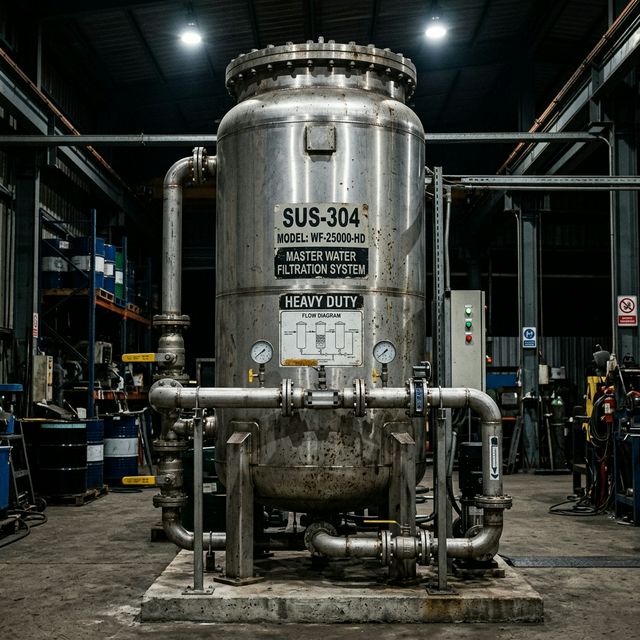
Why Your Outdoor Filter is the Most Important System in Your Home
The truth behind the cheapest and most common water filters in the world.
Do Gravity Pitchers Work?
An independent, scientifically-backed information website dedicated to helping you navigate, compare, and choose the perfect water purification system.
Malaysia's Authority Guide to Buying Water Filters
An independent, scientifically-backed information website dedicated to helping you navigate, compare, and choose the perfect water purification system.